Take Control of Ad Refresh Timing with Refresh Overrides

.svg)
.svg)
d refresh is one of the most powerful levers publishers have for maximising revenue - but until now, the duration has always been set at the config level. That's great for broad control, but what if you need something more surgical?
Meet Refresh Overrides: a new feature in Fusion that lets you define a specific refresh duration based on exactly what came back from the ad server.
How it works
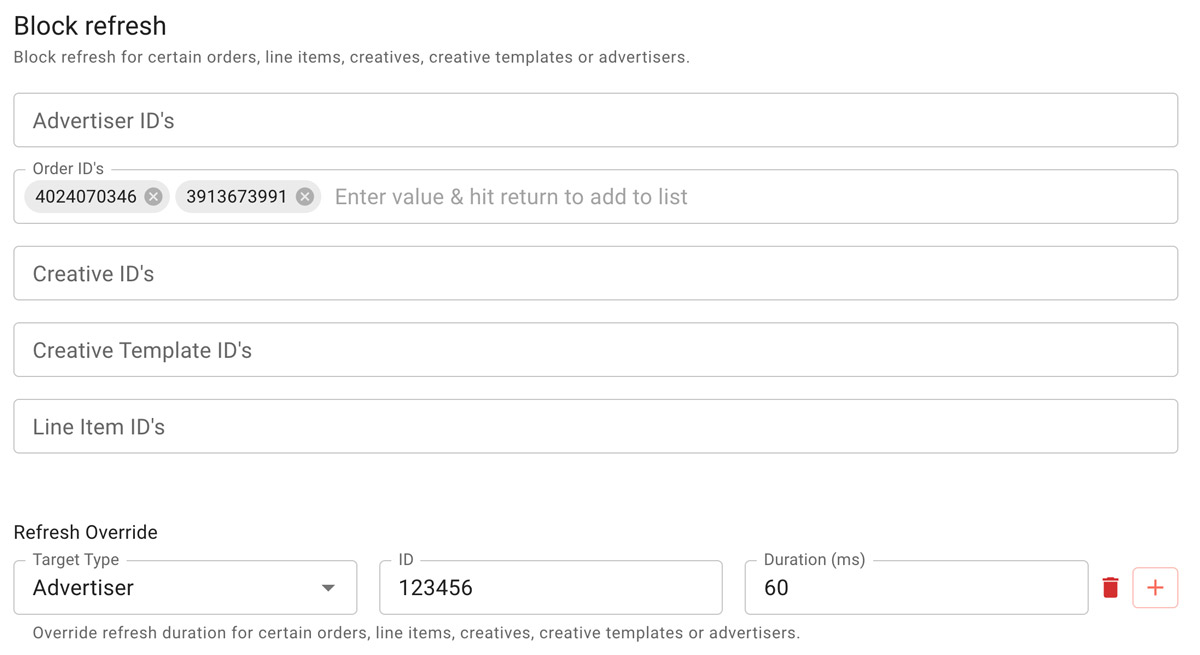
Inside your Google Ad Manager (GAM) Integration in Fusion, you'll find a new Refresh Overrides section Add an override, pick your ID type - Advertiser, Order, Creative, Creative Template, or Line Item - enter the ID, and set your duration.
When Fusion detects a match on page, that override takes effect immediately, regardless of what your config-level refresh duration is set to. Got one config running at 30 seconds and another at 35? Both will honour your override if the ID matches. It's dynamic, clean, and requires no changes to individual configs.
This pairs naturally with the recently launched Refresh Blocking feature, which lets you stop refreshes from firing altogether for specific IDs - useful for high-value creatives or advertisers where a single, uninterrupted view is worth more than multiple refreshes.
A small but important behaviour change
To make overrides work, we've made a subtle change to how refresh timing operates under the hood - and it's worth being aware of.
Previously, the moment Fusion determined a refresh was needed (unit in-view, timer elapsed), it would fire the ad request and simultaneously queue the next refresh timer. Fast and efficient.
Now, Fusion sends the ad request, waits for the response - ad or no ad - and then queues the next refresh. This is necessary because the response is what determines the next duration when an override is in play.
In practice, the delay is milliseconds. Ad requests are built and dispatched almost instantly, so the impact on overall refresh cadence is minimal. Over a long session with many refreshes, it's theoretically possible this could cause you to miss one refresh - but in testing, it doesn't materialise at typical publisher dwell times.
If you ever do notice an impact on impression volumes, the fix is simple: reduce your refresh duration slightly to compensate.
Who's this for?
Refresh Overrides won't be relevant for every publisher - it's a precision tool for specific use cases. Think advertiser guarantees, campaign pacing, or protecting premium line items from over-refreshing. If that's something you manage today manually or via workarounds, this should make your life noticeably easier.
You'll find the feature inside your config settings in Fusion. As always, if you'd like a walkthrough or want to discuss how overrides might fit into your setup, your account manager is happy to help.


